by John Yoakumminor editing by Ed Joffe Here you are, after years of toiling in the practice room on scales, long tones, etudes, and anything else your teacher puts in front of you to become proficient and move up the ladder to perfection and a better career. Endless hours of repetition on the same phrase Continue reading →
Category: Articles
Scholarly documents by Ed Joffe and noted musicians.
Musicians and athletes have much in common. There have been many famous musicians who were excellent athletes including Miles Davis, Benny Carter and Red Garland (boxing); Andy Fusco (football); Harold Wright (baseball); Julio Iglesias (soccer); and Kenny G (golf). Likewise, there have been many athletes who have been fine musicians. Basketball greats David Robinson (pianist) Continue reading →
Originally printed in The Instrumentalist, December 1983 by Kevin Kelly Edited by Ed Joffe At some time, every student of a wind instrument is instructed in the “correct” method of breathing. If he studies with two or three different teachers, he probably learns two or three different methods, all presumably correct. I studied with six horn Continue reading →
This second article on equipment describes eight products, listed alphabetically, that I have found beneficial in my woodwind work and practice. With the exception of the instrument case covers, the remainder concern reeds and reed-related products.
The enforced stay-at-home time brought about by the pandemic has allowed me to examine my approach to music-making, equipment, repertoire, etc. One of the results has been to re-evaluate products that I have been using as well as investigate various new woodwind accessories. Listed below are eight such items, listed alphabetically. This is the first Continue reading →
The practice of borrowing and adapting musical materials has resulted in many of the very best pedagogical texts and works that have become standard repertoire for all musicians. When an exercise or composition is played on an instrument other than the one originally intended for, different combinations of intervals and fingerings emerge that can be Continue reading →
An interview with Robert Marcellus by James Gholson (Originally published in the Australian Clarinet and Saxophone Magazine, March 1999)Edited by Ed Joffe Robert Marcellus, one of America’s greatest and most influential clarinetists and teachers, died on March 31, 1996. He was principal clarinetist of the Cleveland orchestra under George Szell from 1953-1973. During his tenure Continue reading →
by Dr. Ron Odrich An expanded version of an article in The Clarinet, September 2017Minor Editing by Ed Joffe As woodwind players, we are all striving to find the best way to express ourselves musically. This means that the sound we produce must first inspire ourselves then hopefully those listening. To this end, there are Continue reading →
Throughout much of the first half of the 20th Century, musical knowledge was considered one of the important disciplines in a learned individual’s education. Every student had mandatory general music courses in elementary, middle and high schools. More importantly, students had the opportunity to participate in a band, orchestra, or a choir in grades K—12. Continue reading →
Renowned pianist/composer/musical director Billy Stritch recently posted a listing of the many ways that the musical community has been adversely affected by the ongoing Covid-19 virus pandemic. Since the Arts are not a politically sexy topic to discuss on mass media, we have been largely forgotten. Over 12,000,000 people work in entertainment production—not an insignificant Continue reading →
An Interview with Stan Getz by Mel Martin Originally published in the Saxophone Journal, Winter 1986Edited by Ed Joffe Music critic/historian Irving Kolodin writes in the Introduction to “The Unconscious Beethoven” by Ernest Newman: “…music exists only as a succession of impressions that must be correlated sequentially if a total impression is eventually to be Continue reading →
By Robert Bloom Reprinted from Woodwind World, Jan/Feb 1959Minor Editing by Ed Joffe “No, my dears, I am conscious of a flute and a bassoon. That’s not what I want. I want to hear a third instrument, the result of a happy marriage between the two.” The speaker is Arturo Toscanini and the phrase occurs Continue reading →
By Daniel Bonade Reprinted from The Clarinet, No. 6 (Summer, 1951) Minor Editing by Ed Joffe Slurring on the clarinet has always been, in my estimation, the greatest problem for the artist wishing to phrase and sing beautifully on his/her instrument. The root of this problem [for clarinetists and saxophonists] is the “single” reed vibrating Continue reading →
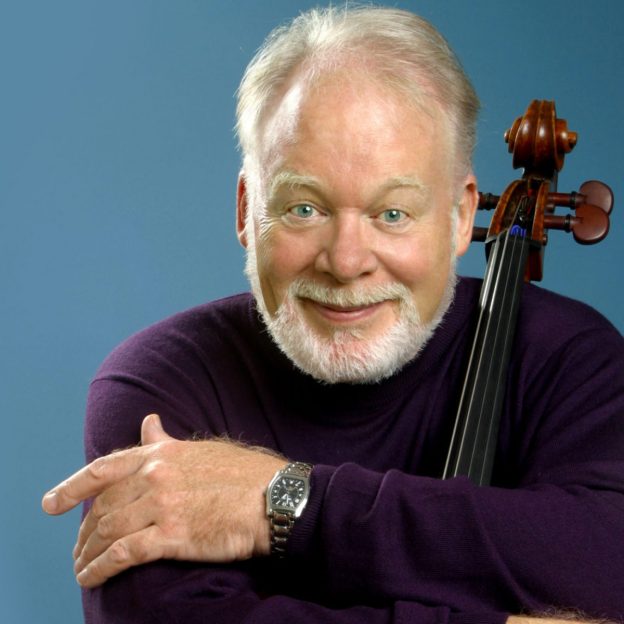
Lynn Harrell was one of the great musicians in American classical music over the past 55 years. Appointed as the principal cellist of the Cleveland Orchestra by George Szell when he was 20, he went on to have an illustrious career as a soloist who performed with every major world-class orchestra and as a chamber Continue reading →
Shown below are the 20 albums that I owned during my first 20 years that influenced and inspired me to become a professional musician. They are shown in the categories that I was most drawn to during that period—jazz, classical instrumental, orchestral, and pop. There were many other artists that influenced me during this period Continue reading →
Having taught privately for over 50 years, been involved in institutional music education for roughly 30 years, and a student of music for close to 60 years, I feel that I have a decent understanding of how to gain the most from a private music lesson. In this article, I will attempt to articulate an Continue reading →
In music, there remains a rule of thumb to tread very carefully before bringing up any pitch discrepancies within an ensemble performance. This would be the musical equivalent of asking a stranger on which side of the political spectrum they tend to vote. One’s pitch-playing ability is among the most sensitive issues for any musician. Continue reading →
In the late 1970s the great saxophonist and woodwind artist, Ray Beckenstein, took me into the pit of the hit Broadway musical, Sugar Babies. There I encountered another wonderful woodwind legend, Dave Tofani, and I proceeded to ask both of them how they could continue to play the same music every night without going crazy. Continue reading →
Robert Frost’s famous poem The Road Not Taken begins with the line: “Two roads diverged in a yellow wood.” In the Fall of 2017 I interviewed multi-reed virtuoso Eddie Daniels as part of my Woodwind Legacy Series and that line occurred to me as we were conducting the interview. During the course of our conversation, Continue reading →
During the course of a music-performing career, one encounters a variety of jobs that vary in their musical orientation and degree of difficulty. The expectation of performing at a high level on any gig is often enough to cause stress in any musician’s life. However, nothing compares to the stress, anxiety, and nervousness that a Continue reading →
When I began to study music, it was much like other baby boomers—piano lessons during grade school years. Eventually, I chose clarinet, then saxophone, and finally flute as my principal instruments. During the course of studies that I embarked upon, I always worked privately with a variety of excellent teachers. Some of these mentors were Continue reading →
During my years as a professor, I had the good fortune to create a Masters degree in multiple woodwind performance (woodwind doubling). As someone who has been involved with this part of the music industry for most of my life, establishing this kind of an opportunity for talented students was a labor of love. It Continue reading →
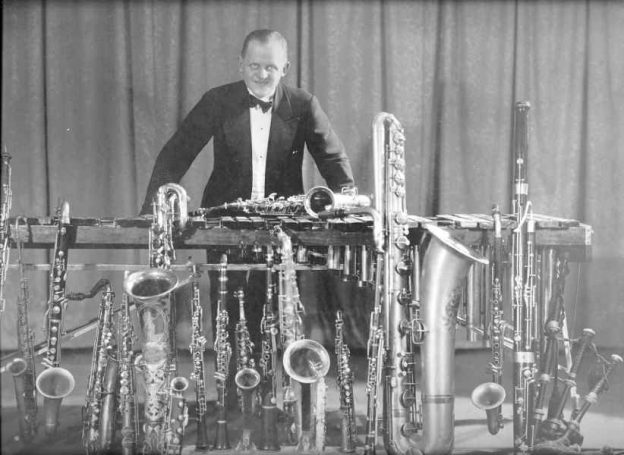
[This is a brief excerpt from Ed’s book: Woodwind Doubling for Saxophone, Clarinet & Flute. The article appeared in the December, 2016 publication of the Local 802 newspaper— ALLEGRO.] Multi-tasking has become a staple of modern living and is certainly a requirement for surviving in today’s music industry. The contemporary saxophone doubler represents the greatest Continue reading →
I retired several years ago as a professor of music from a NJ State University after 24 years. This ended a 30-year career of institutional teaching that spanned 4th grade through graduate school. Having also been a full-time musician for the past 45 years while completing two Masters degrees and a DMA in music, I Continue reading →
Excerpted from Woodwind Doubling for Saxophone, Clarinet & Flute Day 1: Remove the reeds from their container(s) and let them sit belly up (the flat side facing the ceiling) on a flat surface for an hour. Do not play them or wet them. This allows the reeds to become acclimated to the temperature and humidity Continue reading →
An Interview with Lew Tabackin Originally Published November, 2006 The New York Flute Club Newsletter This interview was conducted on Saturday August 19, 2006 at Lew Tabackin’s upper westside townhouse, which he shares with his wife—pianist/composer/arranger Toshiko Akiyoshi. Mr. Tabackin will be presenting a recital with his jazz trio on Sunday November 19, 2006 at Continue reading →
Every professional musician owes part of their success to the talents of their repair technicians. The need to have one’s instrument in top performing shape for any job is self-evident but finding the right repairman is akin to finding the right medical doctor. It is more than just their abilities we seek; it’s also their Continue reading →
The opening verses to two compositions that were both #1 hits, seventy-five years apart, are shown below. While both sets of lyrics describe unsettled relationships, I believe the difference in the sophistication of the lyrics mirrors the “dumbing down” of America’s musical culture over that span of time. It has been reported that the United Continue reading →
Excerpted from Woodwind Doubling for Saxophone, Clarinet & Flute Play each instrument because you love that particular instrument! Aspire to play each instrument as if it were the only one that you play. Set up a disciplined daily practice routine. Have a consistent set of warmups including tone, articulation and scale studies for each instrument. Continue reading →
The following is a brief listing of notable soloists, recordings, and study materials with which a high school clarinetist should become familiar. This information will be particularly useful for those wishing to audition as music majors in college. In all cases, the young clarinetist should be encouraged to study with a professional clarinetist who also Continue reading →
Set Up While the traditional big band setup is desirable for most rehearsals, it is very useful to occasionally establish alternate seating formations, including a box formation and triangle formation. This allows the players hear the music in a different way and proves beneficial when they are reseated in their usual fashion. Instrumentation The standard Continue reading →
The following offers a list of historical big band arrangements that emphasize the saxophone section that can be used by high school jazz bands as well as college jazz ensembles. These charts will enhance the students understanding of different styles of big band orchestration as well as saxophone section performance. Also listed are a variety Continue reading →